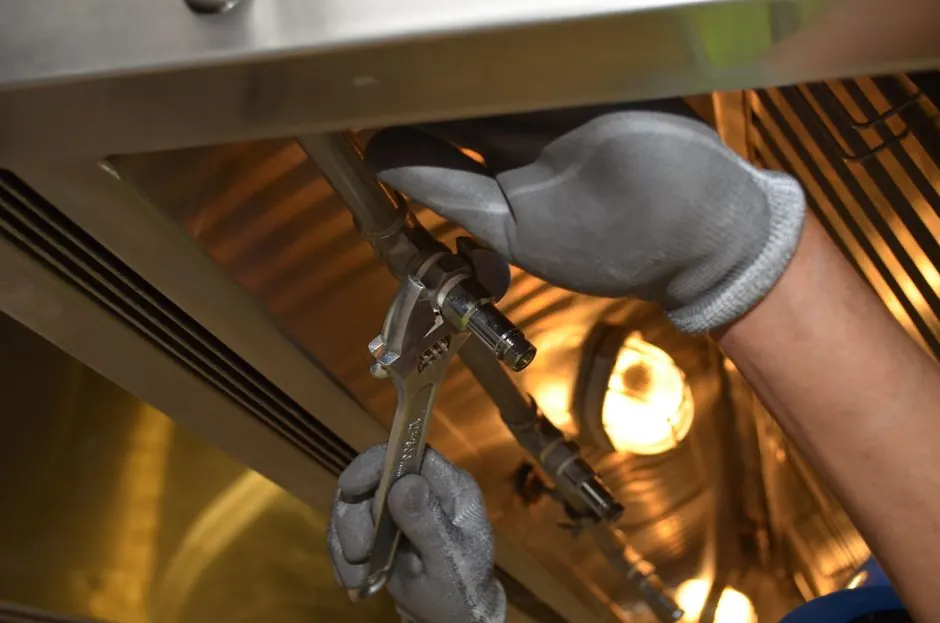
Preparing your furnace for winter in Flagstaff means three things: replace the filter, get a professional tune-up before the first hard freeze, and fix any ignition, blower, or thermostat issue while parts are still easy to get. Do those three things by mid-October and your system will hold up through a Flagstaff winter that routinely drops to 5°F and below at 7,000 feet.
Furnace winter prep Flagstaff AZ is not the same job it is in Phoenix. Our altitude, our propane and natural gas mix, and our six-month heating season change what your furnace needs. Below is the checklist we run on our own customers' systems, what it costs in 2026, and the mistakes that leave people without heat on the coldest night of the year.
What does it take to prepare a furnace for winter in Flagstaff?
Prepare furnace for winter Flagstaff AZ is the process of cleaning, testing, and adjusting a heating system so it runs safely and efficiently through the cold months — it is needed once a year, ideally before your first freeze.
In practice, that means a filter change, a combustion and airflow check, a flame sensor and igniter inspection, a blower amp draw reading, and a thermostat calibration. We also verify the manifold gas pressure, because at Flagstaff's altitude most furnaces need a different setting than the factory default.
Skip it and you are gambling on a system that sat idle for six months. We get the first no-heat calls of the season in late October, and almost every one of them traces back to something a tune-up would have caught in September.
When should you winterize your furnace in Flagstaff AZ?
Winterize your furnace in Flagstaff between mid-September and mid-October. Flagstaff's first hard freeze usually lands in early to mid-October, and overnight lows in the 20s start showing up in the second half of September.
Book earlier than you think. Our schedule fills two to three weeks out by the first week of October, and the same is true for every shop in town. If you wait until the night your house hits 58°F, you are competing with everyone else who waited too.
If you missed the window, do not skip it. A tune-up in November or even December still catches cracked heat exchangers, dirty flame sensors, and failing inducer motors before they strand you in January.
The 9-step furnace winter prep checklist
Here is the sequence we walk through on every system, from a 20-year-old Carrier in Downtown Flagstaff to a newer propane unit out in Kachina Village.
- Replace the filter. A 1-inch filter in a Flagstaff home with pets or wood heat should be changed every 30 to 60 days during heating season. A 4-inch media filter lasts 6 to 12 months.
- Clear the outdoor intake and exhaust. Snow, pine needles, and ice block high-efficiency PVC vents. Keep 12 inches of clearance around them.
- Test the thermostat. Set it 5°F above room temp and confirm the furnace fires within 60 seconds. If it does not, the thermostat or control board is suspect.
- Inspect the flame sensor. A dirty sensor is the single most common cause of a furnace that lights and then shuts off after 5 to 10 seconds.
- Check the igniter. Hot surface igniters crack with age. We measure resistance and replace anything out of spec before it fails.
- Read the blower amp draw. A blower pulling above its rated amps means a failing motor or a restricted duct system.
- Verify manifold gas pressure. At 7,000 feet, most furnaces need a derate. We set it to the manufacturer's altitude table, not the sea-level spec.
- Inspect the heat exchanger. A cracked exchanger is a carbon monoxide risk. We scope it visually and with a combustion analyzer.
- Run a full heat cycle. We let the system run 15 to 20 minutes and watch temperature rise, flue CO, and static pressure before we call it done.
You can do steps 1, 2, and 3 yourself. Steps 4 through 9 need a combustion analyzer and a multimeter, and that is where a real Gas Furnace Repair Flagstaff AZ visit pays for itself.
What furnace maintenance is needed before winter in Flagstaff?
Furnace maintenance Flagstaff AZ homeowners actually need before winter comes down to four categories: airflow, ignition, combustion, and controls. Everything else is a bonus.
Airflow
Filter, blower wheel, and evaporator coil. A dirty blower wheel cuts airflow by 20 to 30 percent and drives up your gas bill. We pull the blower on any system that has not been serviced in three years.
Ignition
Flame sensor, igniter, and gas valve. These three parts cause roughly 70 percent of the no-heat calls we run between November and February. Cleaning the flame sensor takes five minutes and prevents most of them.
Combustion
Heat exchanger, burners, and flue. We check CO in the flue and in the supply air. Anything above 100 ppm in the supply air means shut it down and find the leak.
Controls
Thermostat, control board, and limit switch. We test the high-limit and rollout switches because a stuck limit switch will lock out the furnace on the coldest night of the year.
If your system is over 15 years old and you have already replaced a blower motor or control board, a tune-up is a stopgap. At that point we usually recommend you start pricing a replacement before the next failure picks the timing for you.
What a furnace tune-up actually includes
A furnace tune-up Flagstaff AZ customers get from us runs 60 to 90 minutes and covers 21 checkpoints. The short version:
- Filter replacement and airflow measurement
- Burner cleaning and flame pattern check
- Flame sensor and igniter test
- Heat exchanger inspection
- Blower motor amp draw and lubrication
- Inducer motor and pressure switch test
- Gas pressure adjustment for altitude
- Thermostat calibration and heat cycle verification
- Carbon monoxide test in flue and supply air
We hand you a written report with the readings, not a verbal “looks good.” If we find a part that is on its way out, we tell you now, while it is 60°F outside and you have time to decide.
For commercial properties — restaurants, motels, and offices around Route 66 — we run the same checkpoints on rooftop units and split systems, plus a belt and bearing inspection. That is a separate scope and a different schedule, so call us in September if you manage a building.
How much does furnace winter prep cost in Flagstaff?
Typical 2026 pricing in Flagstaff for a residential furnace tune-up runs $120 to $220, depending on system age, fuel type, and how long it has been since the last service.
Here is what we see across the board:
- Standard gas furnace tune-up: $120–$180
- Propane furnace tune-up: $140–$200 (propane burners foul faster)
- High-efficiency condensing furnace: $160–$220 (more components to test)
- Commercial rooftop unit: $200–$350 per unit
- Filter (1-inch): $8–$25 installed
- Filter (4-inch media): $35–$70 installed
- Flame sensor cleaning or replacement: $90–$180
- Hot surface igniter replacement: $150–$300
- Blower motor replacement: $450–$900
- Control board replacement: $400–$800
Compare that to an emergency no-heat call on a 10°F night: after-hours diagnostic, overtime labor, and a part you pay a premium for. The tune-up is the cheap version of the same visit.
If you are on a fixed income or you manage multiple rentals, ask about our multi-unit pricing. We do a lot of work for landlords in Residential Furnace Repair Flagstaff AZ and we can usually bundle two or three properties into one trip.
Common mistakes we see every October
These are the ones that turn a $150 tune-up into a $700 repair.
- Waiting for the first cold snap. By then every shop in Flagstaff is booked out two weeks and parts counters are picked over.
- Running a filter past its limit. A clogged filter overheats the heat exchanger and shortens the life of the blower motor. It is the cheapest part in the system and the one that causes the most damage.
- Ignoring altitude. A furnace set to sea-level gas pressure at 7,000 feet runs rich, soots up the burners, and trips the flame sensor. We see this constantly on systems installed by out-of-state contractors.
- Blocking the return air. Furniture, rugs, and holiday decorations over the return grille starve the system. Keep 12 inches of clearance.
- Shutting off the furnace in summer and never restarting it until you need it. Run it for 15 minutes in September. If it fails, you find out on a warm day, not a cold one.
- DIY gas work. Cleaning a flame sensor is fine. Opening a gas valve or pulling a burner assembly is not. We have seen more than one homeowner turn a $150 repair into a $1,200 one.
One more: if your furnace is making a sound it did not make last winter — a rumble, a screech, a boom on startup — do not wait for the tune-up. That is a Furnace Making Strange Noises Flagstaff AZ call, and the fix is usually cheaper the earlier you make it.
When to call a professional
Call a professional if your furnace will not fire, if you smell gas, if the flame is yellow instead of blue, or if you see soot around the burner compartment. Those are not tune-up items. They are repair calls, and two of them are safety calls.
Also call us if your system is over 12 years old and has never been serviced. We will run the full checklist, give you the readings, and tell you honestly whether it has another five winters in it or whether you should start planning a replacement.
Flagstaff Furnace Repair Pros handles gas, propane, and electric systems across Flagstaff and the surrounding mountain communities. We stock the common igniters, flame sensors, and blower motors for Carrier, Trane, Lennox, Goodman, Rheem, Bryant, York, and Amana, so most repairs are done in one visit instead of two.
Frequently Asked Questions
How do I prepare my furnace for winter in Flagstaff?
Replace the filter, clear the outdoor intake and exhaust, test the thermostat, then book a professional tune-up before mid-October. The tune-up covers the flame sensor, igniter, blower, gas pressure, and heat exchanger — the parts that cause most winter breakdowns.
When should I winterize my furnace in Flagstaff AZ?
Mid-September to mid-October. Flagstaff's first hard freeze usually hits in early to mid-October, and shops book out two to three weeks by the start of October. Earlier is better, but a November tune-up still prevents most January failures.
What furnace maintenance is needed before winter in Flagstaff?
Four things: airflow (filter and blower), ignition (flame sensor and igniter), combustion (heat exchanger and burners), and controls (thermostat, control board, limit switch). We also set gas pressure for 7,000-foot altitude, which sea-level specs get wrong.
Should I get a furnace tune-up in Flagstaff AZ?
Yes, once a year. A $120–$220 tune-up catches the flame sensor, igniter, and blower issues that cause roughly 70 percent of our winter no-heat calls. Skipping it usually means paying after-hours rates on the coldest night of the year instead.
How much does furnace winter prep cost in Flagstaff?
Expect $120 to $220 for a residential tune-up in 2026, plus $8 to $70 for a filter. Propane and high-efficiency condensing furnaces run toward the top of that range. Commercial rooftop units run $200 to $350 each.
Get help with Furnace Repair in Flagstaff
If your furnace has not been serviced since last winter, book it now — before the October rush and before the first hard freeze. We run the full 21-point checklist, hand you the readings, and fix what needs fixing the same visit.
Call Flagstaff Furnace Repair Pros at (928) 270-0357 to schedule your furnace winter prep in Flagstaff. We serve Downtown Flagstaff, Kachina Village, and the surrounding mountain communities.